BUICK 1255787 Dash Emblem
fits model: Lesabre. make: Buick. year: 1980–1983.
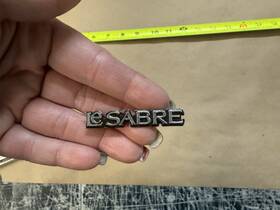
( Manufacturer Part Number: 1255787 ), ( Type: Dash Emblem ), ( Oe/oem Part Number: Oem ), ( Material: Chrome ), ( Vintage Part: Yes ), ( Placement On Vehicle: Dashboard, Right )
Review BUICK Dash Emblem Oem fits LESABRE 1980–1983
The **Buick 1255787 1980-1983 Lesabre Dash Emblem** is a meticulously crafted, high-quality replacement emblem designed to restore the classic elegance and authenticity of your 1980 through 1983 Buick Lesabre. This emblem is a precision-engineered reproduction of the original factory part, ensuring an exact fit and seamless integration with the dashboard s chrome or painted trim. Crafted from durable, high-grade materials, it features a polished chrome finish that gleams under ambient lighting, complementing the luxurious aesthetic of the Lesabre s interior. The emblem s design is both functional and stylish, with crisp, clean lettering that reads "LESABRE" in bold, uppercase type, exuding the timeless sophistication of Buick s signature branding. Perfect for restoration projects or as a replacement for a worn or damaged original, this emblem is built to withstand the test of time, maintaining its shine and structural integrity with minimal maintenance. Whether you re a collector aiming to preserve the heritage of your vehicle or an enthusiast seeking to enhance its curb appeal, this emblem is an essential accessory that bridges the gap between vintage charm and modern durability. Its universal compatibility with the 1980-1983 Lesabre model ensures a hassle-free installation, allowing you to enjoy the refined details that define this iconic American automobile.
### Pros and Cons of Buying a 1980 1983 Buick LeSabre (VIN 1255787) with a 1980 1983 Lesabre Dash Emblem
#### **Pros**
1. **Classic American Muscle Car Aesthetic** The 1980 1983 Buick LeSabre, especially with the Lesabre dash emblem, carries a strong vintage appeal. Its bold styling, chrome accents, and spacious interior evoke a sense of luxury and nostalgia from the late 1970s and early 1980s.
2. **Spacious and Comfortable Interior** The LeSabre was known for its roomy cabin, making it ideal for long drives or family use. The bench seat (or optional bucket seats in later models) provides ample legroom, and the dashboard layout, while dated, is functional and easy to work with.
3. **Reliable Engine Options** Depending on the model year and trim, the LeSabre was available with several engine choices:- **300 HP V8 (1980 1981)** The most powerful option, producing strong acceleration for its time.
- **225 HP V8 (1982 1983)** A slightly less powerful but still capable engine, often paired with a smoother transmission.
- **4-cylinder options (less common in LeSabres)** While not as exciting, these were more fuel-efficient and could be a practical choice if performance isn t a priority.
The V8 engines, particularly the 300 HP version, are known for durability if properly maintained.
4. **Four-Wheel Disc Brakes (Standard on Some Models)** Unlike many cars from this era, the LeSabre (especially the higher trims) often came with four-wheel disc brakes, which provide better stopping power than drum brakes.
5. **Available Automatic Transmissions** The LeSabre was commonly paired with a **THM727 or THM727H3** three-speed automatic transmission, which is relatively simple and reliable if maintained. The 1980 1981 models also offered a **Turbo Hydramatic 400** (four-speed) in some configurations, which is a more advanced option for the time.
6. **Good Resale Value for Classics** As a mid-sized luxury car from the early 1980s, the LeSabre holds its value better than many contemporaries, especially if it s well-preserved or restored. Collectors and enthusiasts appreciate its blend of size, comfort, and vintage styling.
7. **Modification Potential** The LeSabre s size and V8 engine options make it a candidate for performance upgrades. Aftermarket support exists for tuning, suspension modifications, and even modern engine swaps (though these can be complex and costly).
8. **Lower Running Costs (Compared to Modern Cars)** Fuel efficiency isn t great by today s standards (expect around **12 16 MPG combined**), but parts and basic maintenance are often cheaper than those for newer vehicles. Labor costs for classic cars can be higher, but the overall cost of ownership may still be reasonable for a project or hobbyist.
9. **Unique Dash Emblem (Lesabre)** The inclusion of a **1980 1983 Lesabre dash emblem** suggests that the car may have been a **LeSabre Custom** or a special trim level, which often included additional features like better upholstery, wood trim, or chrome accents. This could make the car more desirable to collectors.
10. **Driving Experience** For its time, the LeSabre offered a smooth ride with good handling, especially in the larger body styles. The V8 engines provide a satisfying growl and a sense of power, making it enjoyable to drive on highways or winding roads.
---
#### **Cons**
1. **Poor Fuel Economy** The V8 engines in the LeSabre are thirsty, averaging **12 16 MPG combined**. This makes long-distance driving or daily commuting expensive, especially with today s fuel prices.
2. **Outdated Safety Features** Cars from this era lack modern safety standards:- No **airbags** (standard airbags were introduced in the late 1980s).
- **Basic seatbelts** (no pretensioners or load limiters).
- **No ABS or modern braking systems** (though four-wheel discs help).
- **Poor crash test ratings** by today s standards.
Driving defensively and being cautious of blind spots is a must.
3. **Rust and Structural Issues** Many Buicks from the 1970s and early 1980s suffer from **rust**, particularly in the **floor pans, rocker panels, and wheel wells**. A thorough inspection is critical to avoid buying a car with major structural corrosion.
4. **Electrical Problems** The wiring harnesses and electrical systems in older Buicks can be finicky. Issues like **failing alternators, bad ground connections, or intermittent electrical gremlins** are common. The **1980 1983 models** may also have **early signs of computer-related problems** (e.g., fuel injection glitches in later models).
5. **Transmission Wear** The **THM727 automatic transmission** is generally reliable but can develop **slippage, rough shifting, or fluid leaks** over time. The **Turbo Hydramatic 400** (where available) is more robust but still requires maintenance. Manual transmissions (if equipped) may have **syncro issues or worn clutches**.
6. **Engine Reliability Concerns** While the V8 engines are durable, they are **notoriously prone to oil leaks** (valve cover, oil pan, and rear main seal leaks are common). The **300 HP engine** (especially in 1980 1981) is known for **head gasket failures** if not properly maintained. The **225 HP engine** (1982 1983) is slightly more reliable but still requires attention to oil changes and cooling system health.
7. **High Maintenance Costs** Parts for a 1980 1983 Buick are available but can be **expensive**, especially for rare or discontinued items. Labor costs for classic cars are often higher than for modern vehicles, and finding a skilled mechanic familiar with Buicks may require extra effort.
8. **Comfort and Modern Conveniences** The LeSabre lacks many modern amenities:- **No power steering or power brakes** (standard on later models, but early ones may have manual steering).
- **Basic climate control** (no automatic temperature control in many trims).
- **Clunky interior materials** (vinyl seats, basic dash, and limited storage).
- **Poor visibility** (especially in the larger body styles due to tall rooflines).
9. **Emissions and Modern Compliance** If you plan to drive the car frequently, you may need to deal with **emissions testing** (in some states). Older cars can sometimes be **grandfathered in**, but modifications (like exhaust or engine changes) may require compliance with modern standards.
10. **Project Car Potential** Unless the car is **already restored or in excellent condition**, buying a LeSabre often means committing to a **major restoration project**. This includes:
- **Bodywork** (rust repair, repainting, or panel replacement).
- **Interior refurbishment** (seats, dash, carpets).
- **Mechanical overhaul** (engine, transmission, suspension, brakes).
- **Electrical system updates** (wiring, gauges, lighting).
The time and cost required can be significant, which may not be feasible for everyone.
11. **Resale Value Depends on Condition** While the LeSabre holds its value better than many contemporaries, a **project car** will depreciate quickly. Only a **well-documented, restored, or low-mileage example** will retain value.
12. **Limited Aftermarket Support** Compared to modern cars or even some older muscle cars (e.g., Camaros, Mustangs), the LeSabre has **less aftermarket support**. Finding parts, tuners, or enthusiast communities can be more difficult.
---
### **Conclusion**
Buying a **1980 1983 Buick LeSabre (VIN 1255787) with a 1980 1983 Lesabre dash emblem** can be a rewarding experience for the right buyer. It offers a **unique blend of vintage luxury, size, and V8 power**, making it a standout classic car. However, it also comes with **significant challenges**, particularly around **rust, maintenance costs, poor fuel economy, and outdated safety features**.
This car is best suited for:- **Enthusiasts who enjoy restoration projects** and are willing to invest time and money into bringing it back to peak condition.
- **Collectors who appreciate the era s styling and want a statement car** for display or occasional driving.
- **Those who prioritize driving experience over modern convenience** and are comfortable with the limitations of an older vehicle.
- **Buyers who find the LeSabre s size and comfort appealing** for long drives or as a weekend cruiser.
It is **not ideal
Details:
80-83 Buick LeSabre dash emblem OEM. Shiny with pins and little to no pitting. Good used condition.
part #: 1255787 prices
- $15.74-$25.25
specifications interiocatruc:
- for models: Lesabre
- for makes: Buick
- for years: 1980-1983
- mpn: 1255787
- type: Dash Emblem
- oe/oem part number: Oem
- material: Chrome
- vintage part: Yes
- placement on vehicle: Dashboard, Right
seller interiocatruc:
- city: Orwigsburg, Pennsylvania
- rating: 99.9%
- # reviews: 15116
returns interiocatruc:
- paid by: Buyer
- policy: Returns Accepted
- time: 30 Days
general interiocatruc:
- condition: Used
- Interior Parts Accessories > Dash Panels Glove Boxes > Dash Panels
shipping interiocatruc:
- carrier: USPS
- service: USPS Ground Advantage
- class: Standard
- transit: 4-8 Days
- type: Fixed
- cost: $5.99
offer interiocatruc:
- options: Ship-to-home
- best offers: True
- sold: 0
- quantity: 1
- started: March 8, 2026
- availability: In Stock
payments interiocatruc:
- credit card: Visa
- wallet: Google-pay
- other
Buick 1255787 Is Similar To:
- 09356994 Delco Oem 1995-2002 Buick (11.5% similar) In great condition. Works great...(October 3rd, 2017)
- 09383744 Buick Century Oem Am Fm Radio Cassette Player (22.4% similar) Oem am FM cassette radio removed from 2002 buick century in excellent working order - blue plug connection. Buyer pays shipping in the us...(July 23rd, 2018)
- 15924887 116175290 06 2006 07 2007 Buick Lucerne Am Fm Cd Dvd Navigation Nav Radio Stereo Oem Lkq 00140 (21.8% similar) Sound system options if equipped with Bose, active audio, premium, or similar type that requires amp,of the time it will not work in a vehicle not already equipped with that system. Just because it looks like it will fit, doesn mean it will. Verify with dealer on mach monsoon radios, and other ...(October 17th, 2015)
- 10376760 123239530 Buick Rendezvous Lacrosse Allure Single Cd Cassette Tape Player Radio Oem Lkq 01522 (23.2% similar) There is a chance the dealer may charge a service fee to obtain the code. Verify with dealer on mach monsoon radios, and other special audio systems. No antenna, DVD disc, or wiring is included, unless stated above. If a control box is needed for these other than the part listed, it will not be ...(July 15th, 2016)
- 12560080 Gm Buick Oem 97-98 (22.5% similar) Est, Mon to Fri...(March 17th, 2017)
- 13297381 181802791lkq Buick Regal Radio Control Panel Face Oem Lkq (23.5% similar) Sound system options: if equipped with Bose, active audio, premium, or similar type that requires amp,of the time it will not work in a vehicle already. There is a chance the dealer may charge service fee to obtain code. Just because it looks like will fit, doesn. XML Sirius instar other satellite ...(March 22nd, 2019)
- 13420057 Genuine Buick Oem Verano Passenger Right Roof Air Bag (15.7% similar) All used airbags are sold 'as is. Used airbags are not tested by AZ602AUTOPARTS. Free shipping only in the lower 48 states. To meet any safety standards...(December 12th, 2018)
- 13510391 Gm Buick Oem Lacrosse Keyless (19.8% similar) All airbag modules are also non returnable. Est, Mon to Fri...(August 11th, 2018)
- 15797876 Buick Lucerne Disc Cd Player Radio Receiver Oem (36.7% similar) This offer is for a oem original buick CD player...(September 5th, 2018)
- 16216424 Buick Lesabre Am Fm Cassette Player Radio (33% similar) 89BNXMD163200216. 1997 buick lesabre am FM cassette player radio. I have listed parts that were all removed from a 1997 buick lesabre. No CD player. Part no few small scuffs scratches, see pictures. I will use my best judgement and pictures to describe these parts...(October 30th, 2018)
- 20938766 195876140lkq Buick Lacrosse Air Compressor Kit Oem Lkq (31% similar) ...(February 14th, 2019)