FORD F57B1004810-AL Ashtray Plug 12V
fits model: Ranger. make: Mazda, Ford. year: 1997–1998.
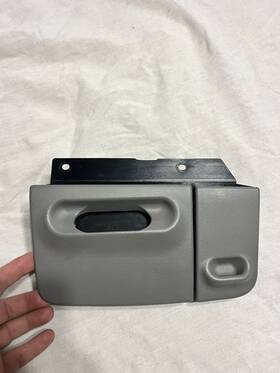
( Brand: Ford ), ( Manufacturer Part Number: F57B1004810-AL ), ( Type: Ashtray/ Power Port ), ( Color: Gray ), ( Material: Plastic ), ( Country Of Origin: United States ), ( Placement On Vehicle: Dashboard )
Review FORD Ranger mazda Ashtray 12v Plug Gray Oem fits RANGER 1997–1998
The **Ford F57B1004810-AL 1997 1998 Ranger / Mazda Ashtray with 12V Plug** is a high-quality, direct-fit replacement accessory designed specifically for the interior of first-generation Ford Ranger (1997 1998) and its Mazda counterpart, ensuring a seamless integration with the vehicle s original design. Crafted from durable, automotive-grade materials, this ashtray features a sturdy, molded construction that resists warping, cracking, or fading over time, even under the influence of heat, moisture, or frequent use. Its sleek, contoured shape is engineered to nest perfectly within the designated compartment in the center console, providing both functionality and a polished aesthetic that complements the vehicle s cabin. The ashtray includes a **12-volt power plug**, allowing it to serve a dual purpose as a convenient charging station for small electronic devices like portable chargers, GPS units, or phone accessories, enhancing the Ranger s utility without compromising its original form. Whether you re a daily driver looking to maintain a tidy interior or a customization enthusiast seeking a practical upgrade, this ashtray offers a practical solution that balances form and function. Its easy installation requiring no modifications to the vehicle s wiring or console makes it an ideal choice for DIYers and professionals alike. Built to withstand the demands of active lifestyles, this ashtray ensures that your Ford Ranger or Mazda remains both functional and stylish for years to come.
### **Pros and Cons of Buying a 1997-1998 Ford Ranger (F57B1004810-AL) with a Mazda Ashtray 12V Plug**
#### **Pros**
1. **Affordability** These trucks are relatively inexpensive to purchase, making them a budget-friendly option for those needing a basic utility vehicle. Prices typically range from $2,000 to $5,000, depending on condition.
2. **Simplicity and Reliability** The 1997-1998 Ford Ranger (especially the 2.3L or 3.0L engines) is known for its straightforward mechanics, which can be easier and cheaper to repair than modern vehicles. Many parts are still available, and mechanics familiar with older models are common.
3. **Off-Road Capability** The Ranger was designed with off-road use in mind, featuring a sturdy frame, good ground clearance, and available 4WD systems. The 1997-1998 models still hold up well in light off-road conditions.
4. **Modularity and Customization** The Ranger s simple design allows for easy modifications, such as aftermarket lifts, suspension upgrades, or engine swaps (e.g., the Mazda 3.3L or 4.0L engine, which is why the "Mazda ashtray" reference is relevant these engines are popular for their power and reliability).
5. **Fuel Efficiency (Compared to Larger Trucks)** While not exceptional by modern standards, the 2.3L engine (especially in the base model) gets decent fuel economy for its size, averaging around 16-18 MPG combined. The 3.0L V6 is slightly less efficient but still reasonable.
6. **Availability of Parts** Since these trucks are no longer in production, parts (especially for the 2.3L and 3.0L engines) are still widely available, reducing long-term repair costs.
7. **Potential for Engine Swaps** The Ranger s engine bay is compatible with several aftermarket engines, including the **Mazda 3.3L (B6ZE) or 4.0L (BP) V6**, which offer better power and longevity. The "Mazda ashtray" reference likely refers to the intake manifold or related components from these engines, which are often used in swaps for improved performance.
8. **Low Running Costs** Basic maintenance (oil changes, brakes, tires) is inexpensive, and the truck can be driven hard without excessive wear if properly maintained.
9. **Resale Value (If Well-Maintained)** While not high, a well-kept Ranger in good condition still holds some resale value, especially if it has a reliable engine or aftermarket upgrades.
10. **Good for Light-Duty Work** If you need a truck for hauling small loads, towing light trailers, or general utility work, the Ranger is capable, though not as powerful as modern models.
---
#### **Cons**
1. **Outdated Safety Features** These trucks lack modern safety standards such as **stability control, side airbags, or advanced collision warning systems**. The frame and body are also less rigid than modern vehicles, making them more prone to rust and structural issues.
2. **Rust and Corrosion** The 1997-1998 Ranger is notorious for rust, especially in the wheel wells, frame rails, and undercarriage. A thorough inspection is **mandatory** before purchase to avoid costly repairs.
3. **Poor Fuel Economy (Especially with Larger Engines)** The 3.0L V6 model gets around **13-15 MPG combined**, which is inefficient for a vehicle of this size. The 2.3L is slightly better but still not great.
4. **Weak Suspension and Ride Quality** The stock suspension is stiff and uncomfortable for long drives. Off-road, it can be adequate, but on-road, it lacks the smoothness of modern trucks.
5. **Electrical Issues** Older Rangers are prone to **faulty wiring, failing alternators, and battery problems**. The 12V plug (likely referring to the ashtray or related electrical components) may need attention if the truck has seen heavy use.
6. **Transmission Problems** The 4-speed automatic (common in these models) can develop **slipping, rough shifting, or solenoid failures** over time. The manual transmission is more reliable but requires more maintenance.
7. **Limited Modern Tech** No **Bluetooth, USB ports, or advanced infotainment** navigation is done via a basic radio or paper maps. Starting the truck may require a key (no push-button start).
8. **Towing and Payload Limits** The stock Ranger has a **towing capacity of around 3,500 4,000 lbs** (with a 3.0L V6), which is decent but not exceptional. Payload capacity is also modest, limiting heavy-duty work.
9. **Emissions and Modern Regulations** Some older Rangers may not meet **modern emissions standards**, which could cause issues if used in certain areas or for commercial purposes.
10. **Discontinued Support** While parts are still available, **official dealer support and warranties are no longer an option**. Repairs must be done through aftermarket suppliers or independent mechanics.
11. **Potential for Hidden Mechanical Issues** Engines like the **2.3L (Zetec) and 3.0L (V6)** are known for **head gasket failures, timing chain stretch, and oil leaks** if not properly maintained. A **pre-purchase inspection is critical**.
12. **Noisy Cabin** The interior is basic, with thin panels that transmit road noise. Modern trucks have much better sound insulation.
13. **Limited Aftermarket Support (Compared to Modern Trucks)** While modifications are possible, the **lack of modern aftermarket parts** (e.g., advanced suspension, lighting, or tech upgrades) can limit customization options.
14. **Resale Depreciation** If you plan to sell later, the Ranger will depreciate quickly compared to newer trucks, especially if it requires major repairs.
15. **Noisy Exhaust and Intake** The stock exhaust and intake systems can be **loud and inefficient**. Aftermarket upgrades (like the Mazda intake) improve performance but may not be worth the cost for casual use.
---
### **Key Considerations Before Buying**
- **Inspect for Rust** Check the **wheel wells, frame rails, and undercarriage** thoroughly. Rust can weaken structural integrity.
- **Test the Engine** Listen for **knocking (timing chain stretch), ticking (head gasket issues), or oil leaks**. The 2.3L and 3.0L engines are prone to problems if neglected.
- **Check the Transmission** Shift smoothly through all gears. A slipping or delayed shift indicates trouble.
- **Verify Electrical Systems** Test **lights, battery, and the 12V plug (ashtray area)** for proper function. Old wiring can fail.
- **Confirm Maintenance Records** If possible, ask for **service history**, especially oil changes and timing belt/replacement (if applicable).
- **Consider an Engine Swap** If you plan to modify the truck, a **Mazda 3.3L or 4.0L V6 swap** can significantly improve reliability and power. However, this adds complexity and cost.
- **Budget for Repairs** Even a "good" example may need **suspension work, rust repairs, or electrical fixes**. Plan for **$1,000 $3,000 in unexpected repairs** in the first year.
---
### **Conclusion and Recommendation**
#### **Who Should Buy This Truck?**
- **Budget-conscious buyers** who need a **basic utility vehicle** for light work, hauling, or off-roading.
- **DIY mechanics** who enjoy **modifying and repairing** older trucks.
- **Those who prioritize affordability over modern comforts** and are willing to accept trade-offs in safety and fuel efficiency.
- **People planning an engine swap** (e.g., Mazda 3.3L/4.0L) to improve reliability and performance.
- **Occasional drivers** who won t use the truck daily and can store it properly to minimize rust.
#### **Who Should Avoid This Truck?**
- **Those who prioritize safety** (modern airbags, stability control, etc.).
- **Daily commuters** who need **comfort, fuel efficiency, and low maintenance**.
- **People who dislike mechanical work** older trucks require **more attention than modern vehicles**.
- **Buyers who want long-term resale value** these trucks depreciate quickly.
- **Those in areas with harsh winters** (unless properly winterized, as older trucks can be prone to electrical and fluid issues in cold weather).
#### **Final Recommendation**
If you **find a well-documented, rust-free example** with a **reliable engine (preferably a 3.0L V6 or a swapped Mazda engine)** and you re prepared for **potential repairs**, the **1997-1998 Ford Ranger can be a great budget-friendly truck**. However, **expect to spend extra on maintenance** and **avoid buying without a thorough inspection**.
**Best Use Cases:**Light
Details:
Used ashtray / 12 v power outlet from a 1997 Ford Ranger.
part #: f57b1004810 prices
- $35.00-$49.99
specifications interiocatruc:
- for models: Ranger
- for makes: Mazda, Ford
- for years: 1997-1998
- brand: Ford
- mpn: F57b1004810-al
- type: Ashtray/ Power Port
- color: Gray
- material: Plastic
- country of origin: United States
- placement on vehicle: Dashboard
shipping interiocatruc:
- class: Standard
- carrier: USPS
- transit: 5-12 Days
- service: USPS Ground Advantage
- cost: $8.81
- type: Calculated
returns interiocatruc:
- policy: No Returns
offer interiocatruc:
- started: March 21, 2026
- quantity: 1
- availability: In Stock
- sold: 0
- best offers: True
- options: Ship-to-home
payments interiocatruc:
- other
- wallet: Apple-pay
- credit card: Mastercard
- money order
general interiocatruc:
- condition: Used
- Interior Parts Accessories > Dash Panels Glove Boxes > Dash Panels
seller interiocatruc:
- # reviews: 273
- city: Racine, Ohio
- rating: 100.0%
Ford F57B1004810 Is Similar To:
- -w711305-s439 W711305-s439 Ford W711305s439 Genuine Oem (19.5% similar) Don't wait order today to take advantage of the best deals...(November 7th, 2017)
- Zk916rdo144 Zk916icn144 Zk916rdo1442 165519534 Ford Fusion Control Panel Cd Player Display Sreen Oem (22.3% similar) There is a chance the dealer may charge service fee to obtain code. No antenna, DVD disc, or wiring is included, unless stated above. If an optional antenna is needed, it will not be included unless stated. If a control box is needed for these other than the part listed, it will not be included ...(May 9th, 2018)
- Zl222rdo144 174175350lkq Ford Explorer Radio Am Fm Cd Oem (26.5% similar) There is a chance the dealer may charge service fee to obtain code. If a control box is needed for these other than the part listed, it will not be included unless stated. XML Sirius instar other satellite equipped components: listing will not include service from these providers. Verify with dealer...(June 5th, 2018)
- Zl464rdo144 178372988lkq Ford Focus Am Fm Cd Xm Radio Panel Oem (28.2% similar) If a control box is needed for these other than the part listed, it will not be included unless stated. If an optional antenna is needed, it will not be included unless stated. No antenna, DVD disc, or wiring is included, unless stated above. Verify with dealer on mach monsoon radios, and other ...(August 22nd, 2018)
- Zl490rdo144 178489054lkq Ford Mustang Am Fm Cd Radio Receiver Oem (19.4% similar) Wore out buttons on the am and seek, noted with picture. No antenna, DVD disc, or wiring is included, unless stated above. Sound system options: if equipped with Bose, active audio, premium, or similar type that requires amp,of the time it will not work in a vehicle already. Just because it looks ...(February 15th, 2019)
- Zl506rdo1442 177683579lkq Ford Focus Am Fm Cd Radio Receiver Oem (23.8% similar) There is a chance the dealer may charge service fee to obtain code. Verify with dealer on mach monsoon radios, and other special audio systems. If an optional antenna is needed, it will not be included unless stated. XML Sirius instar other satellite equipped components: listing will not include ...(June 17th, 2018)
- Zl791rdo144 185715059lkq Ford Super Duty Am Fm Cd Radio Receiver Oem (21.8% similar) Sound system options: if equipped with Bose, active audio, premium, or similar type that requires amp,of the time it will not work in a vehicle already. Verify with dealer on mach monsoon radios, and other special audio systems. If a control box is needed for these other than the part listed, it ...(October 5th, 2018)
- Zl983rdo144 189574373lkq Ford Fusion Am Fm Cd Radio Receiver Oem (23.8% similar) XML Sirius instar other satellite equipped components: listing will not include service from these providers. Verify with dealer on mach monsoon radios, and other special audio systems. Sound system options: if equipped with Bose, active audio, premium, or similar type that requires amp,of the time ...(March 30th, 2019)
- Zm655rdo144 207056212lkq Ford Fusion Am Fm Cd Radio Panel Oem (28.6% similar) No antenna, DVD disc, or wiring is included, unless stated above. XML Sirius instar other satellite equipped components: listing will not include service from these providers. Verify with dealer on mach monsoon radios, and other special audio systems. There is a chance the dealer may charge service ...(March 6th, 2019)
- Cm5t-19c107-kg 109239550 12 13 14 Ford Focus Navigation Single Disc Cd Player Radio Oem 03904 (26.9% similar) If a control box is needed for these other than the part listed, it will not be included unless stated. No antenna, DVD disc, or wiring is included, unless stated above. Just because it looks like it will fit, doesn mean it will. Verify with dealer on mach monsoon radios, and other special audio ...(November 7th, 2015)
- Ds7t-19c107-ck 110123531 13 14 15 16 Ford Fusion Cd Mp3 Player Radio Receiver Oem 07396 (21.8% similar) If a control box is needed for these other than the part listed, it will not be included unless stated. Sound system options if equipped with Bose, active audio, premium, or similar type that requires amp,of the time it will not work in a vehicle not already equipped with that system. Just because ...(February 27th, 2016)